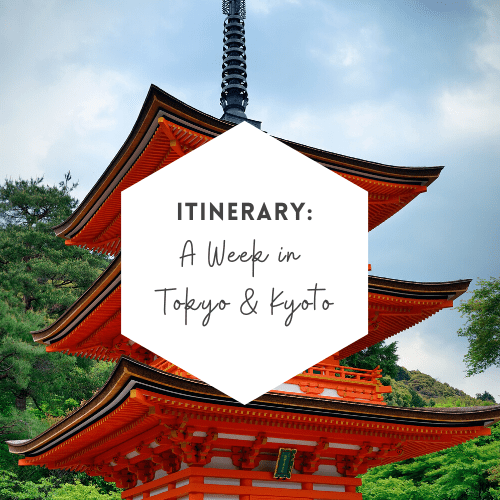
I built this itinerary with myself and my mom in mind – we had talked about a trip to Japan together.
TOKYO
DAY 1 : SHOPPING + FLASHINESS
Morning stroll through Ginza to explore its shops and depato (dept. stores). Walk through the nearby Harajuku and Omotesando fashion districts.
Harajuku
Harajuku Station on East Japan Railway – Yamanote Line.
Omotesando and Takeshita Street are two main shopping streets in Harajuku area.
Tokyo Midtown
Tokyo Midtown is a district of ultramodern buildings surrounding a historic Japanese garden. The Tokyo Midtown complex has sophisticated bars, restaurants, shops, art galleries, a hotel and leafy public spacew, etc. Visit Hinokichō-kōen – Formerly a private garden it is now a public park for the benefit of visitors to Tokyo Midtown. Adjacent to the park, Midtown Garden is a cherry tree-lined grassy space that is a lovely picnic spot.
Dinner: Vinoteca
- Open-air dining overlooking the gardens of Tokyo Midtown. Reservations necessary.
After Dinner Drink: Roppongi
Tokyo’s best-known nightlife district for young Japanese and foreigners, Roppongi has more bars and nightclubs than any other district outside Shinjuku, as well as a multitude of restaurants serving international cuisine.
DAY 2: HISTORIC JAPAN
Morning at Buddhist Senso-ji in Asakusa.
Nakamise Dori (street) leads straight to Sensoji Temple. When Tokyoites talk about shitamachi (old downtown), they are referring to the traditional homes and tiny narrow streets of the Asakusa and Ueno areas.
Next, head to Ueno for the afternoon. Ameya Yokocho street market, which was originally a black market after World War II and is spread underneath the Yamanote train tracks. North of Ueno is Yanaka, a residential area of traditional old homes, neighborhood shops, and temples.
Tokyo Cruise offers scenic rides aboard the suijō bus (water bus) under the 12 bridges up and down the Sumida-gawa and across Tokyo Bay to Odaiba. There is a port at Azumabashi Pier near Asakusa and Odaiba.
DAY 3: FUNKY JAPAN
Make a super early visit to the Tokyo Central Wholesale Market (Tokyo Chuo Oroshiuri Ichiba) then Tour the Imperial Palace and environs.
- Visit Oedo Onsen Monogatari,Tokyo’s spiffiest spa complex. Get off the metro at the TelecomCenter station and cross the parking lot to arrive. Get a locker key, pick a yukata bathrobe of your choice and change into it,then head out into the spa armed just with the key. There are restaurants, bars, souvenir shops etc, all of which can be paid with your key.
- When night starts to fall, board the Metro Ginza line to Shinbashi and change to the Yurikamome line to the artificial island of Odaiba. This is a futuristic all-automated train-bus-monorail – the approach to Odaiba via a 270-degree loop that propels the train onto the Rainbow Bridge is particularly interesting. There’s lots of futuristic architecture including the s Fuji TV building, and even a copy of the Statue of Liberty by the seaside.
FOOD:
- Kado: Set in a house built in 1950 in a residential neighbourhood, Kado reveals a rare glimpse of Tokyo prior to the late-20th-century economic miracle. Lunch is simple, such as curry rice or om-rice (seasoned rice in an omelette), while five-course dinners emphasize traditional Japanese recipes and seasonal produce. There is no English menu, though the staff do their best to accommodate. From Kagurazaka Station, turn left and left again into the jagged street across from Copain Copine; Kado is at the first four-way corner. Transport: Tōzai Line to Kagurazaka (exit 1)
- Shamaim: Take a quick train ride from Ikebukuro to this Israeli-owned all you can eat restaurant. Enjoy some sheesha/hookah as well. The restaurant is located across the street from the south exit of Ekoda station, which is three stops away from Ikebukuro on the Seibu-Ikebukuro line. Address: 4-11 Sakae-cho Nerima-ku 2F, Art Bldg Transport: Seibu-Ikebukuro Line to Ekoda (S exit)
Take the Bullet Train to Kyoto
KYOTO
Day 4: KYOTO SIGHTS + SHOPPING
These two temples are located at opposite sides of the city. Taxi is the best way between them and would take 20-30 minutes
Shijo Shopping district is between the two temples:
Shijo, by Kawaramachi Station, Takashimaya department store and across the street Koto + (pronounced Koto Cross), home to eight narrow floors of fashion, beauty salons and cafes aimed at a young female crowd.
Kiyomizu-dera was selected as a finalist for the New Seven Wonders of the World It’s the most visited temple in Kyoto that has been around since 778. The present buildings date back to 1633. Kiyomizu-dera is famous for its waterfall that comes out in 3 streams to feed a pond. There are several small restaurants and charm shops onsite.
DAY 5: GION – GEISHA DISTRICT
DayTime:
Gion, a collection of streets defined by old wooden buildings, teahouses and exclusive Japanese restaurants, is by far the most famous Geisha district. Numerous bus routes stop at the Gion Bus Stop.
Tea Ceremony at a Tea House in Gion
En, a small teahouse in Gion with tatami tearooms and English-speaking Kimono-clad servers. You’ll find it next to Chionin Temple, a short walk from the Chionmae bus stop on route number 206 from Kyoto Station.
- En – $20/person. Reserve by email at least 24 hours in advance Takes place at 3, 4, 5 and 6PM.
Night time:
Pontocho Geisha District of Kyoto
Visit this ancient alleyway packed with bars, hostess clubs, restaurants, karaoke and Geisha tea houses. Runs between Sanjo Street and Shijo Street along the Kamogawa river. It’s packed with mid-priced and expensive restaurants, bars, karaoke, hostess clubs and Geisha tea houses.
Additional Info:
There are various shops in Kyoto that offer to costume you as a Geisha for a day. They do a reasonably good job of it. In fact, tourists often take photos of other tourists thinking they are Geisha.
Kyoto is famous for it’s food. In particular, it’s known for it’s Kaiseki (traditional Japanese multi-course meals). Kaiseki is fine food and can be pricey. Meals may have 5-14 courses. Each course is small and aesthetically pleasing.
 bikesandbordeaux.com